
Monday, June 16, 2014

Saturday, August 31, 2013
Sharon Stuart Introductory Ikebana Workshop September 14, 2013
Introductory Ikebana Workshop

Japanese Flower Arranging
Learn beginning techniques and design principals of Ikebana.
Learn how to cultivate awareness and attention to balance, harmony, and space thru this creative art form.
Instructor: Sharon Stuart, Sensei - Sogetsu School
Saturday, September 14, 2013
10 am - 1pm $50
Everything furnished, bring flowers home with you
1619 Adriel Way, Fort Collins, Co 80524
Reply to: sharonstuart@gmail.com or 221-0983
Wednesday, September 14, 2011
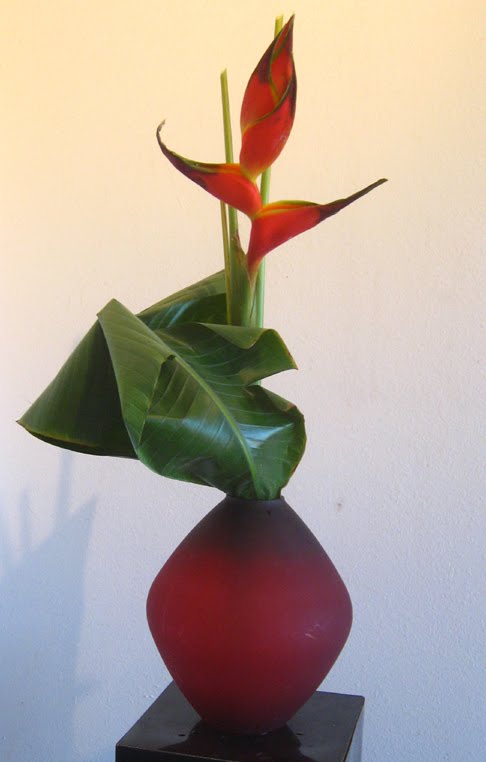

Sunday, July 3, 2011

Poudre River Gallery
Fort Collins Group Sogetsu Exhibition
and demonstration by
Sharon Stuart - Sensei

by Sharon Stuart - Sensei

Two containers - Tropicals
by Renee Choury

Feature unusual container and hydrangeas
by Holly Field

Tropical theme
by Jeanne Matsuda

Featuring Water with Calla Lillys
by Pam Turner
Thursday, June 30, 2011
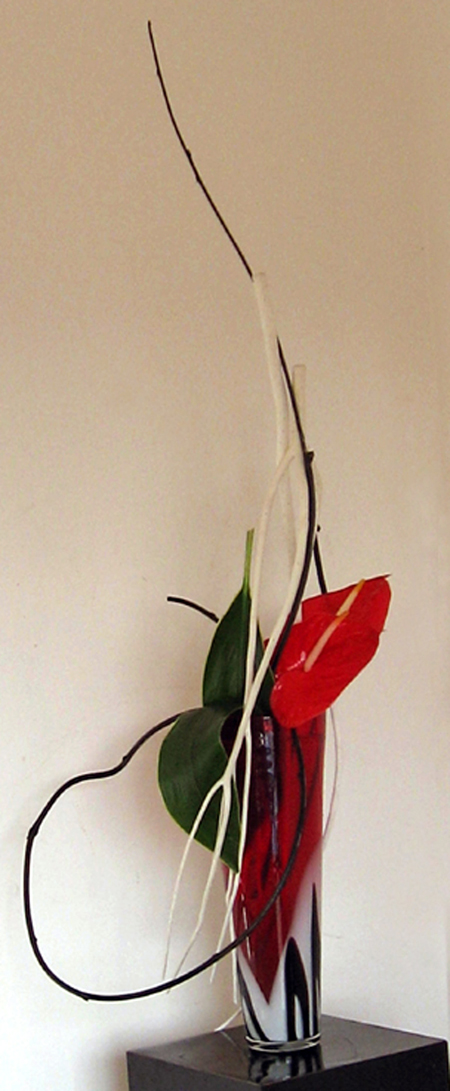 FLOWER POWER
Poudre River Gallery
400 N. College Ave
First Friday Gallery Walk July 1, 2011Live Demonstration in the Small Gallery
Ikebana - Japanese Flower Arranging
Sharon Stuart - Sensei
Master Teacher from the Sogetsu School
This contemplative art form teaches you to cultivate awareness and attention to balance, harmony and space
Sunday, January 9, 2011
Ikebana Fort Collins, Continuing Classes, Sogetsu School

Continuing Ikebana Classes 2011
Every 2nd & 4th Tuesdays
10:00am - 12:00pm $25.00 per class
January 11 & 25
February 8 & 22
March 8 & 29
April 12 & 26
May 10 & 24
June 14 & 28
Thursday, November 18, 2010
Introductory Ikebana Classes at the Shambhala Center Fort Collins

IKEBANA Japanese Flower Arranging
Learn beginning techniques and design principals of Ikebana. Learn how to cultivate awareness and attention to balance, harmony, and space thru this creative art form.
Instructor: Sharon Stuart, Master Teacher Sogetsu School
Introductory Classes at the Shambhala Center Fort Collins
4 week Series
Tuesday evenings 6:30 -8:30
January 4, 11, 18, 25, 2011
$120.00 includes all materials - take flowers home
Register @ www.fortcollins.shambhala.org,
or call 970-221-0983

Wednesday, August 18, 2010

Saturday, June 5, 2010
Ikebana: The Art of Japanese Flower Arranging

In ancient times. Ikebana was controlled by priests of the major temples and practiced by royalty and samurai warriors to add spiritual balance to their lives. Monks offering flowers to the Buddha brought Ikebana, the art of flower arrangement, to Japan in the sixth century. Previously secret and unavailable to the populace, this art has been made available to people in all walks of life.
Today, Ikebana is one of the most well known of Japan's traditional arts. It is Zen-like--a hands-on practice creating a living sculpture. Ikebana has emerged from the traditional setting of the tokonoma, an alcove in a Japanese house, to include harmoniously designed arrangements that fit virtually any environment. This added dimension to the use and meaning of Ikebana has in no way altered those fundamentals of structure, space and naturalism, which have been developed and perfected over the centuries.
There are many schools of Ikebana, each with its own fundamentals. In basic form, an Ikebana arrangement follows a fixed pattern: an irregular triangle of three points representing Heaven, Man and Earth . Emphasis is placed on linear perfection, color, harmony, space and form.
Just as paintings are artistic expressions brushed on canvas, Ikebana is a three-dimensional artistic expression composed of flowers and plant materials. It is up to the aesthetic awareness of the Ikebana practitioner to assemble the materials, choose their most beautiful aspects, order them and endow them with a value transcending that which they had in nature.
Wednesday, March 24, 2010
Introductory to Ikebana Worksho[p

Ikebana
Japanese Flower Arranging
A contemplative Art
Sharon Stuart sensei
master teacher sogetsu school
INTRODUCTORY WORKSHOP
SATURDAY APRIL 3, 2010
10am - 1 pm $45.00
call to reserve your space
970 221-0983


Subscribe to:
Posts (Atom)

